Streaming Control Panels
Manage streams, destinations, schedules, presenters, recordings and status.
Custom broadcasting platforms, media dashboards, automation, APIs and cloud software designed around your workflow.
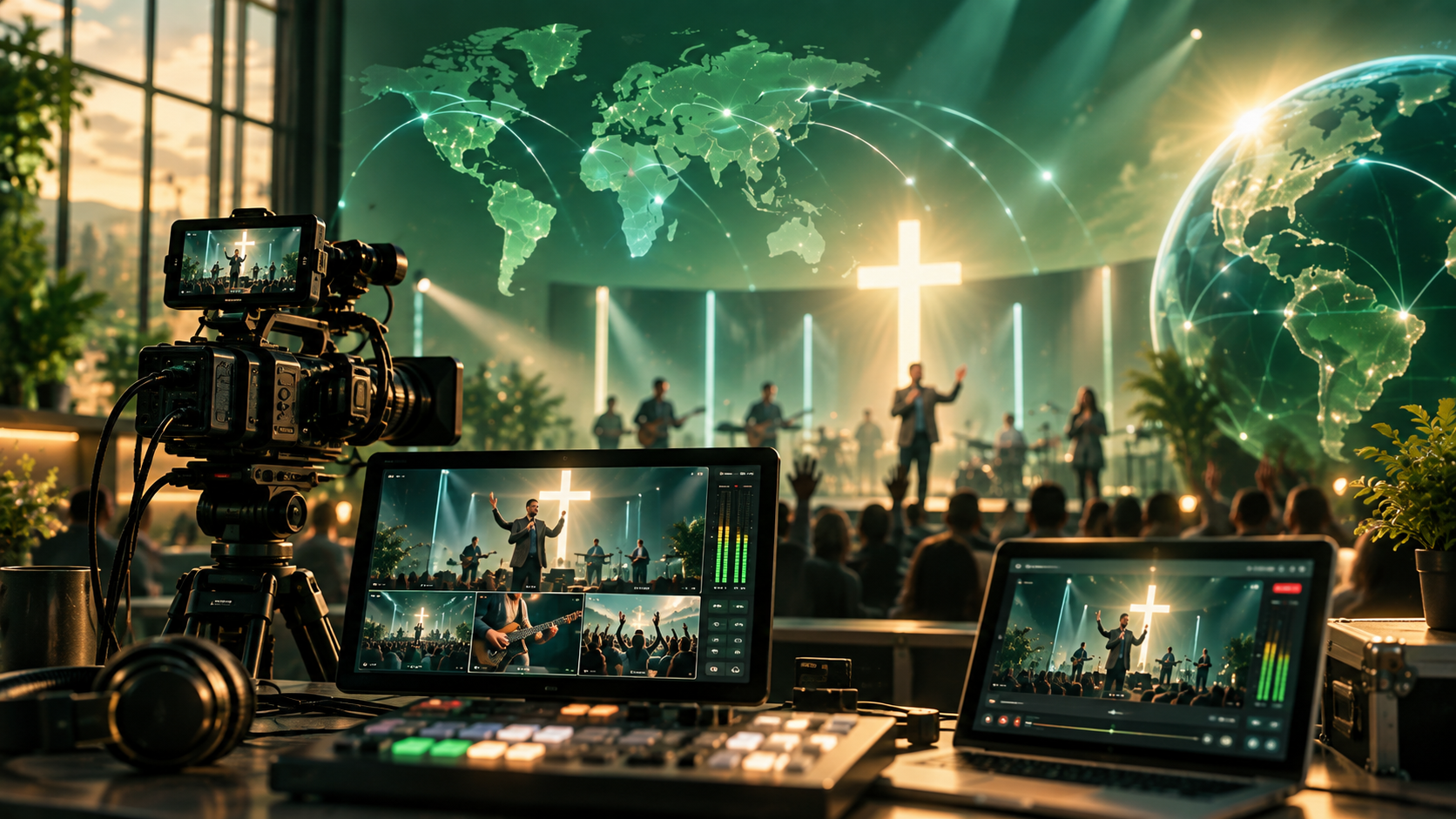
We can build with technologies suited to the project, including real-time media, audio processing, video ingest, transcoding, server-side applications and browser-based control systems.
Manage streams, destinations, schedules, presenters, recordings and status.
Automate ingest, transcoding, recording, metadata, distribution and playback.
Custom sermon, podcast, video and audio libraries with roles and workflows.
Radio and video software built around real live operations.
Connect websites, apps, streaming providers, Bible services and internal tools.
Secure web applications and infrastructure designed to be administered remotely.
Professional ministry technology is not only about the feature list. It is about understanding who will use the system, what happens when the service goes live, what needs to happen afterward and how the organisation will be supported as it grows.
Our approach to Full-Stack Software Development begins with the people and the mission rather than with a server specification. The service is designed for ministries and Christian media organisations with workflows that cannot be solved cleanly by an off-the-shelf plugin or generic SaaS product. The objective is to design purpose-built software around the ministry process instead of forcing the ministry to work around the software. That means we ask practical questions first: who is creating the content, who is watching or listening, what happens if a volunteer is operating the system, what should remain available after the live moment, and what level of control does the ministry actually need?
For a church, the important thing may be that a member who is unwell can still hear the message. For a Christian broadcaster, the important thing may be reliable 24/7 programming and accurate Now Playing information. For a ministry with several channels, the priority may be one control area that keeps media organised. The technology should adapt to those outcomes instead of forcing every organisation into the same workflow.
Every digital media experience has a chain behind it. In this area the source might be broadcast control, scheduling, media management, presenter accounts, recording, publishing, reporting and integrations. We plan what captures that source, where it is sent, how it is processed, what is stored, how it is published and what the audience sees. That end-to-end view is important because many “player problems” actually begin earlier in the signal path, and many “website problems” are really content or API problems underneath.
Our toolkit can include custom dashboards, APIs, user accounts, role permissions, media workers, automation, scheduling, databases, monitoring and integration layers. We choose the pieces that suit the requirement rather than adding technology simply because it is fashionable. A simple ministry should be allowed to stay simple. A complex broadcaster should have room for automation, redundancy, metadata, monitoring and custom control where those capabilities genuinely improve the operation.
A broadcaster could require a control panel where presenters upload programmes, administrators approve them, a scheduler places them on air, FFmpeg prepares the files, a stream service plays them and the public website updates automatically.
A polished interface is only valuable when the systems behind it are dependable. Depending on the project, our engineering work can involve PHP, Node.js where appropriate, SQLite or relational databases, REST APIs, Nginx, FFmpeg, RTMP, HLS, background jobs, authentication and secure deployment. We think about authentication, validation, caching, sensible file permissions, SSL, service health, logs, backup paths and what happens when an upstream service is temporarily unavailable. Those details are not always visible on the home page, but they are the difference between a demo and a platform that can support real ministry activity.
We also design for change. A ministry may start with one stream and later need multiple channels. A basic sermon archive may later need speakers, series, search, podcasts and mobile publishing. A website may grow into a member portal or media management system. Building with clean separation between content, presentation and infrastructure gives the organisation more room to grow without throwing everything away.
Church technology often has a unique usability requirement: the person operating it may be a full-time media director, but it may also be a volunteer who uses the system once a week. Interfaces therefore need clear status information, predictable controls and sensible defaults. We favour dashboards that show what is live, what is recording, what needs attention and what the next action should be, rather than hiding essential tasks behind layers of technical terminology.
That same thinking applies to the public experience. Players should be obvious. Sermons should be easy to find. Mobile layouts should not feel like a reduced desktop site. Contact and prayer forms should be comfortable to use. When a ministry publishes a piece of content, the website and app should present it in a way that reflects the care put into creating it.
Start with what you need today, but keep a route open for higher traffic, more storage, additional channels, mobile features or custom automation later.
Where appropriate, the complicated infrastructure can remain in the cloud so the church does not need to maintain broadcast servers inside the building.
Technology is easier to adopt when there is somewhere to ask a question. We combine the platform with practical technical support and guidance.
We measure success by whether the technology helps the organisation communicate, publish, reach and serve people more effectively.
No. We can work with technical teams when a ministry has them, but our services are also intended for organisations that want us to handle much of the technical complexity. We explain the parts your team needs to operate and keep the infrastructure side as manageable as possible.
Yes. That is often the best approach. Start with the live stream, website, hosting or app capability that solves the immediate need, then add recording, podcasting, additional channels, APIs or custom software when the ministry is ready.
In many cases, yes. We can review the current setup and determine whether integration, migration or a phased rebuild is the most sensible route. The aim is to preserve useful existing work rather than replace systems without a reason.
Support is part of how we think about the platform. We use monitoring, logs and clear troubleshooting steps to identify where a problem is occurring, then help the team restore service and understand what happened. For important broadcasts, preparation and testing are just as valuable as emergency troubleshooting.
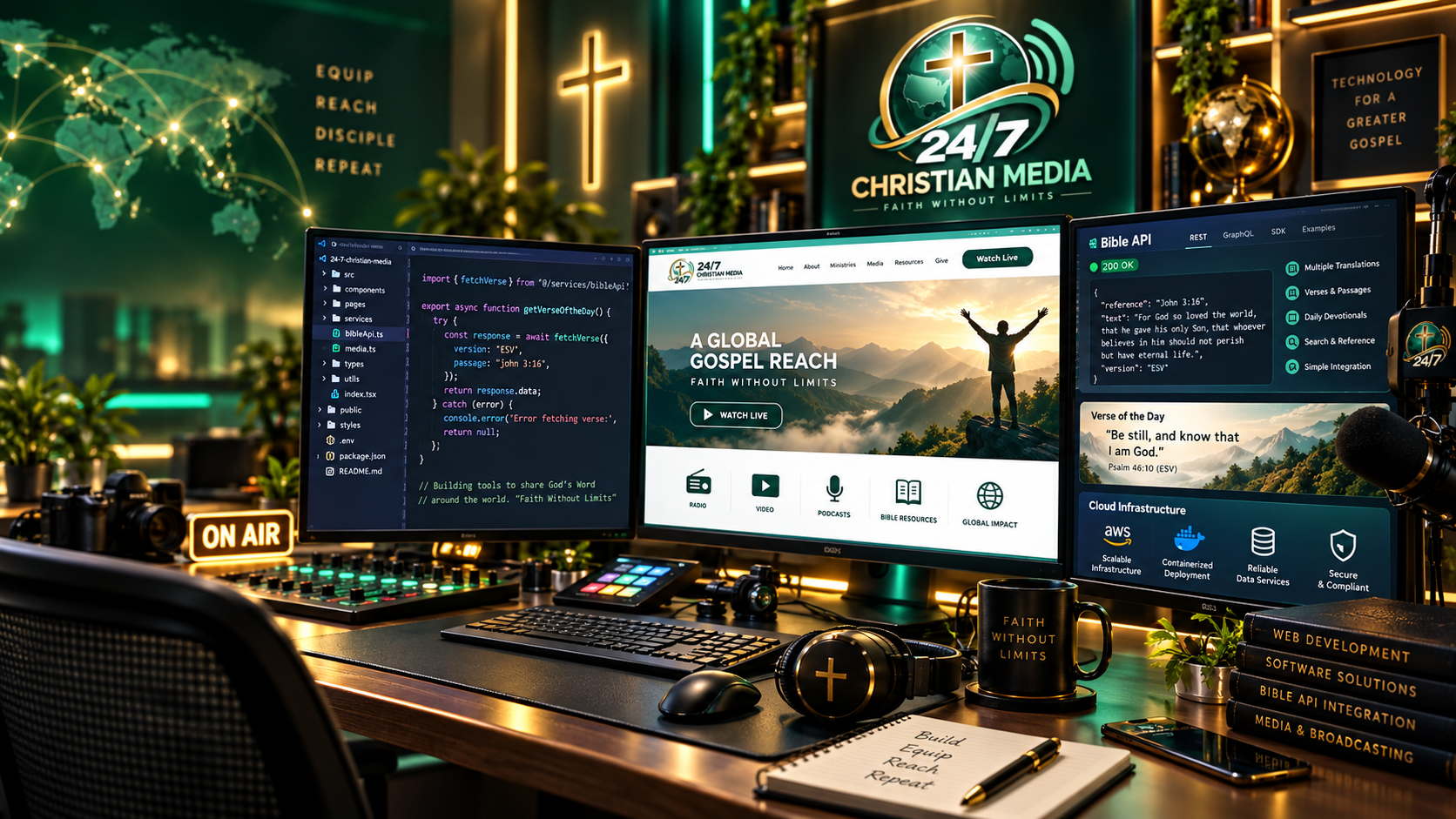
Web, software, Bible API and cloud development showcase.
We combine interface design, broadcast engineering, cloud infrastructure and full-stack development so the finished experience looks professional and works behind the scenes.
Build Something Like ThisTell us what you want to stream, build or launch. We’ll help you create the right cloud media solution.