Familiar Control
Use industry-standard cPanel, WHM and specialist service panels rather than a locked mystery interface.

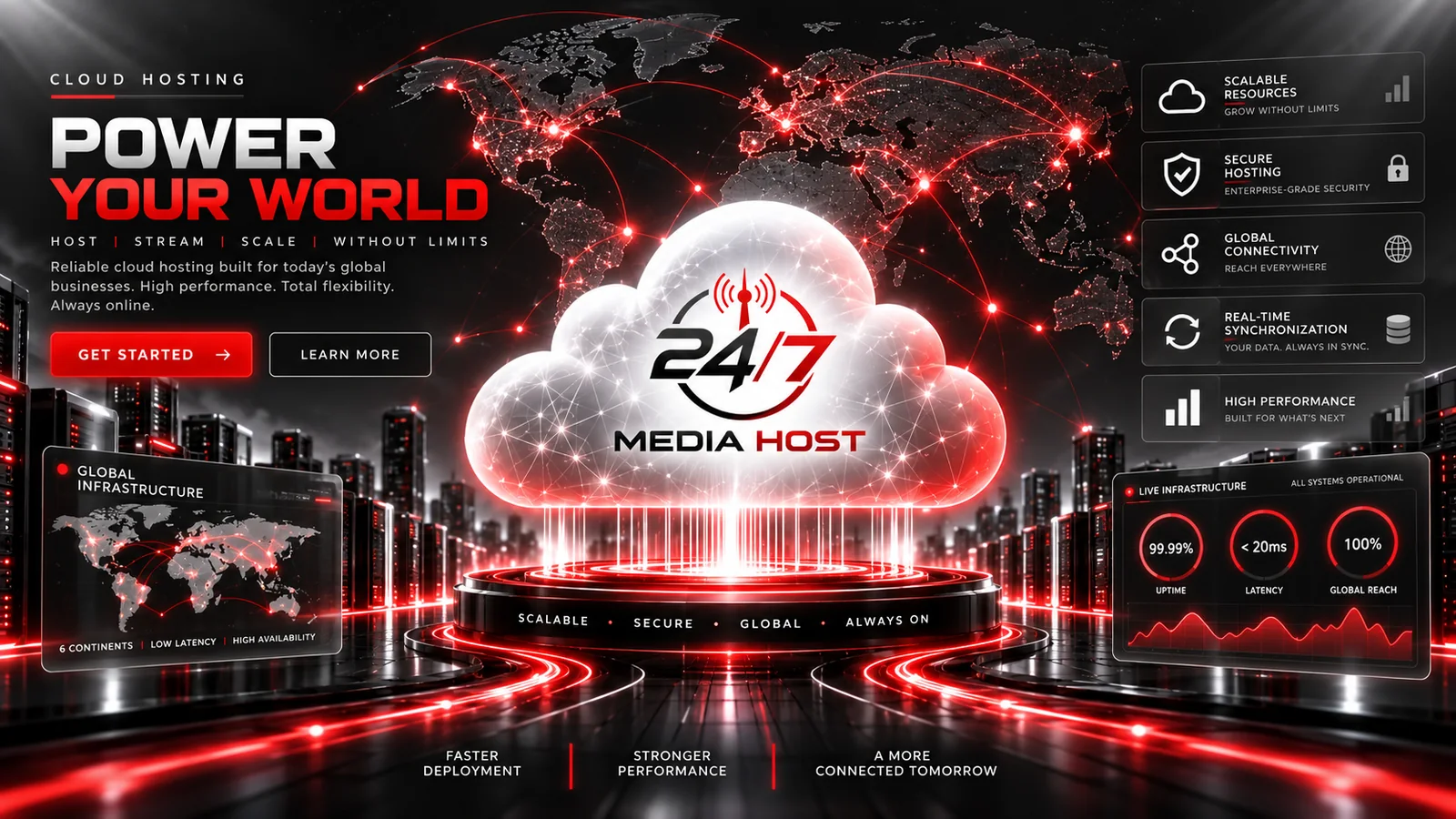
Launch faster with cPanel-backed hosting, VPS and cloud infrastructure, streaming platforms, development, SEO, paid growth and real support — all connected under one high-performance digital ecosystem.
Familiar panels, specialist streaming technology and clear upgrade paths from first launch to serious scale.
NVMe cPanel hosting with LiteSpeed and Softaculous.
From $9.99/mo →SHOUTcast, Icecast, AutoDJ and broadcast panels.
From $19.99/mo →RSS, secure storage, analytics and direct file access.
From $14.99/mo →HLS, VOD and specialist media delivery architecture.
From $39.99/mo →Isolated Linux compute, root access and scalable resources.
From $24.99/mo →Flexible cloud-backed compute, delivery and resilience.
From $39.99/mo →Campaigns, search and social programmes connected to the pages, analytics and funnels behind them.
Google and Meta acquisition with conversion tracking.
From $495/mo →Technical SEO, local visibility and rank growth.
From $495/mo →Content calendars, publishing and community support.
From $495/mo →Paid social, retargeting and lead funnels.
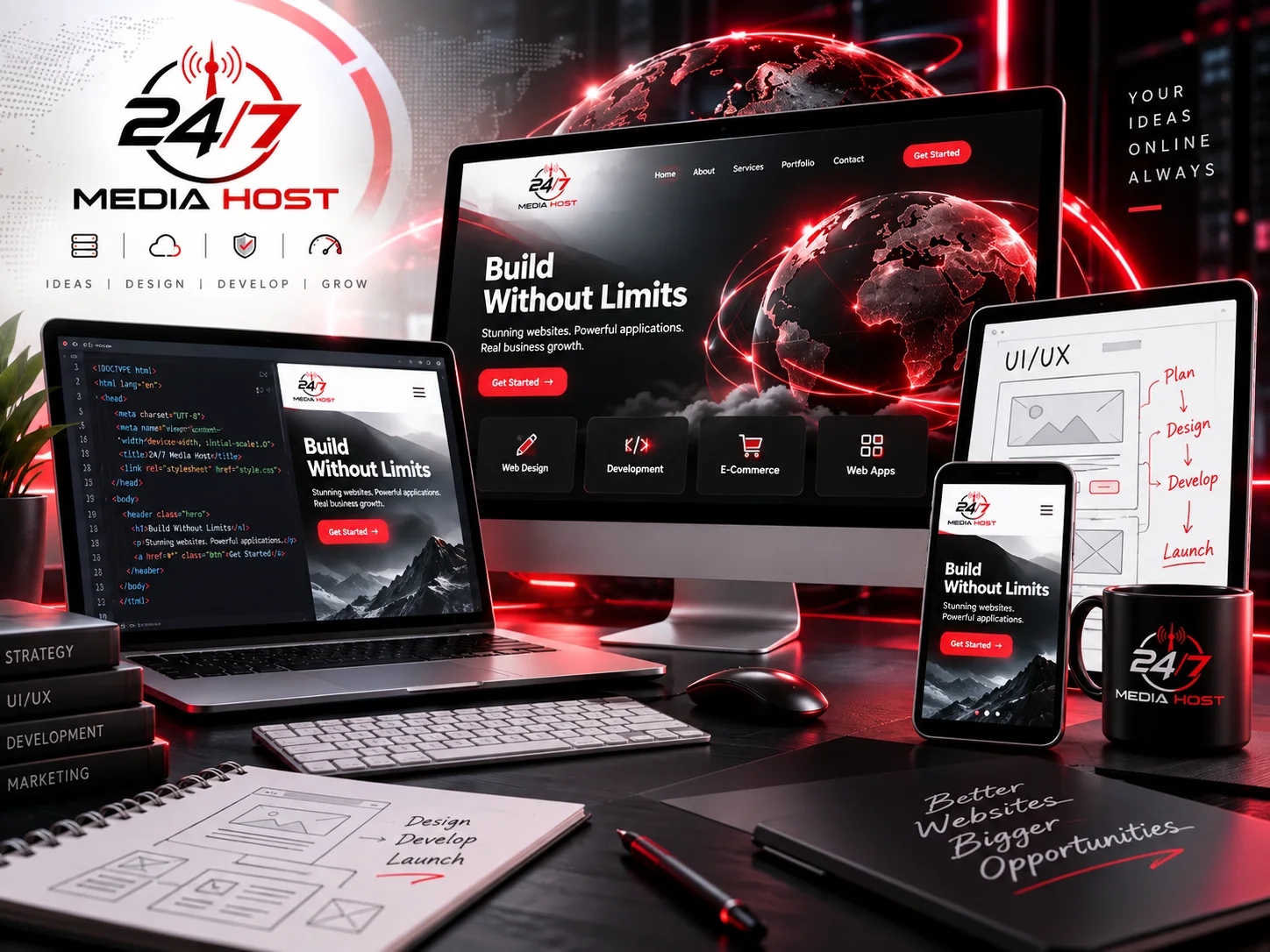
From $595/mo →From conversion-first UI through PHP platforms, mobile apps and custom WordPress systems.
UI/UX and Figma systems designed for real deployment.
From $1,250/project →Custom PHP/MySQL apps, APIs and automation.
From $2,500/project →iOS and Android companion applications.
From $4,995/project →Bespoke themes, plugins, WooCommerce and LiteSpeed.
From $1,250/project →Administrative, customer and technical support managed through structured client-portal workflows.
Hosting, streaming, websites, applications, marketing and customer support all depend on people who understand how the pieces connect. Our team brings technical experience, creative thinking and practical business support together so customers can move from idea to launch, growth and long-term operation with one trusted partner.
Meet the Services →
Get practical help with onboarding, hosting accounts, domains, SSL, email, streaming services, billing questions and day-to-day platform issues. When a problem needs deeper technical attention, it can be escalated with the right context instead of sending customers between disconnected suppliers.
Get Support-Ready Services →
From conversion-focused business websites and ecommerce experiences to custom portals, PHP applications, API integrations and mobile-ready interfaces, our design and development services are shaped around real customer journeys, measurable performance and maintainable technology.
Explore Development →
Find practical cPanel tutorials, AzuraCast help, VDO Panel walkthroughs, Linux and VPS commands, WordPress guidance and troubleshooting articles. Customers can solve common issues faster, understand the tools behind their service and move to managed support when they need hands-on help.
Browse Knowledgebase →
Grow visibility with technical SEO, useful long-form content, stronger landing pages, internal linking, paid acquisition and conversion-focused campaigns. The aim is not simply more traffic; it is to attract the right audience and give them a clear reason to become a customer.
Grow My Visibility →
The technology stack, website, campaigns and support workflows can be designed around each other.
Use industry-standard cPanel, WHM and specialist service panels rather than a locked mystery interface.
Hosting, development and marketing teams can solve cross-platform problems without supplier ping-pong.
Start with the simplest infrastructure that fits and move to stronger resources only when the workload requires it.
Production deployments use least privilege, SSL, sensible file permissions and supported runtime versions.
Backups, migration and rollback are treated as operational requirements instead of afterthoughts.
Route account, development and service questions through one commercial relationship.
Start with one service or combine multiple disciplines into a larger platform.
Tell us what you are launching, fixing or scaling.
We map the service, hosting and integration requirements.
Build, configure, migrate and test the production environment.
Add capacity, campaigns or operational support when the business needs it.
Many websites and PHP/MySQL applications can. Specialist streaming and workloads that need persistent processes use the appropriate dedicated layer instead of being forced into shared hosting.
Yes. Product order URLs, client-area links and support links are configurable so the public site can hand off cleanly into WHMCS.
Yes. Every category stands alone, while the architecture makes it easy to add related services later.
Long-form technical guides help customers solve common issues, understand the technology and know when to escalate.
SSL, email, Softaculous, backups and PHP/MySQL performance.
Read guides →AutoDJ, playlists, live DJs, mounts and Now Playing APIs.
Read guides →OBS, RTMP, HLS, VOD and video troubleshooting.
Read guides →Ubuntu, Debian, AlmaLinux and Rocky Linux administration.
Read guides →Hosting, streaming, websites, applications, marketing and support are often purchased from different suppliers. That can work until a problem crosses the boundary between them. A slow landing page becomes an advertising issue, a DNS change becomes an email issue, a live stream becomes a website-player issue, and a software integration becomes a support workflow. Our model is designed to reduce that supplier ping-pong by keeping the architecture understandable and by documenting where each responsibility belongs.
Every service should have a clear production path. That means supported runtimes, least-privilege access, HTTPS where appropriate, backups before material change, monitoring of the things that can actually fail and a rollback or escalation path. Familiar tools such as cPanel, WHM, WordPress and Linux are used where they fit; specialist tools such as AzuraCast or VDO Panel are used for the jobs they were designed to handle. We do not describe one control panel as if it magically replaces every infrastructure layer.
Clear technical boundaries are good for conversion because customers can see what happens after checkout. Package limits, project scope and support expectations should be visible enough to compare without reading a contract for basic answers. Where a requirement is unusual, the public package becomes the starting point for a custom architecture rather than a promise that every workload fits the same box.
The Knowledgebase is a core part of the customer experience, not an SEO afterthought. Guides explain cPanel, AzuraCast, VDO Panel, WordPress and Linux administration with verification steps and safe troubleshooting methods. Strong documentation reduces repetitive tickets while giving search engines useful, substantial content that naturally connects to commercial service pages. When a guide reaches the point where managed help is more appropriate, the relevant hosting or engineering service is linked directly.
A small business may begin with one cPanel website; a broadcaster may begin with one station; a custom application may begin on one VPS. Growth should add capacity and resilience deliberately rather than creating a maze of tools. That is why migrations, resource upgrades, CDN integration, additional streams, APIs and operational support are treated as extensions of a known system. The objective is to preserve control while the platform becomes more capable.
SEO is strongest when the technical site and the content strategy support each other. Fast pages, correct canonical URLs, clean redirects, sitemaps, structured data, helpful internal links and substantial service copy create a better foundation than thin pages generated solely to target keywords. Calls to action are placed where the visitor has enough context to act, while guides provide deeper answers for research-stage visitors. The result is a site that can attract, educate and convert instead of treating those as separate projects.
The practical benefit of the model is accountability. You can start with a single service and still have a path to design, development, streaming, marketing or operations when the requirement expands. The goal is not to sell every service to every customer. It is to make sure the next technical decision does not undermine the work already completed.
Start with hosting, streaming, software, marketing or support — then connect the pieces as the business grows.